shots in each documented group
yards to the target
fps final-string average
fps ES / SD
The first group was the reason to stop.
An initial group of approximately 8 inches showed that this rifle was not ready for continued ammunition testing. No photograph was retained. Shooting stopped so the platform could be evaluated for root cause; the later factory baseline and final configuration are separate, documented five-shot records made only after the optic interface was corrected and verified.
When the first group says stop.
This customer-owned Christensen Arms Ridgeline .300 PRC came in for evaluation after an initial approximately 8-inch group showed that its practical accuracy did not match expectations. The goal was not to keep shooting a rifle in questionable condition, chase a single group, or assign blame to one component. It was to stop, inspect the platform, correct a confirmed issue, and then compare documented configurations on the completed rifle.
Initial inspection found a compromised scope-base mounting interface. That interface was corrected and later verified before the ammunition comparison continued. The page documents the result of that process, not a repair procedure or a general guarantee for other rifles.
Four retained photographs. A later measured sequence.
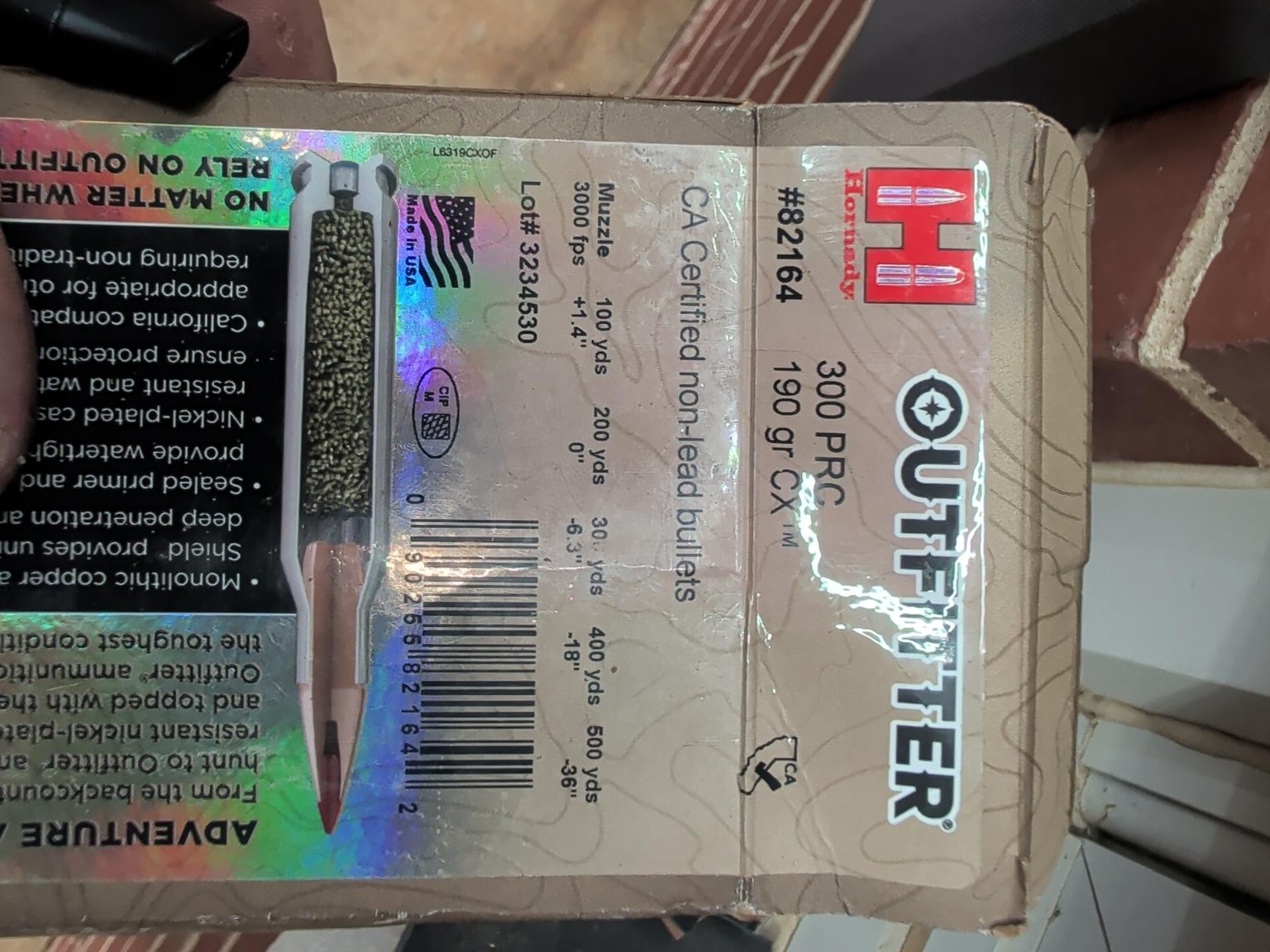
Documented factory baseline
Hornady Outfitter .300 PRC ammunition with the 190-grain CX projectile established the baseline on the completed rifle.
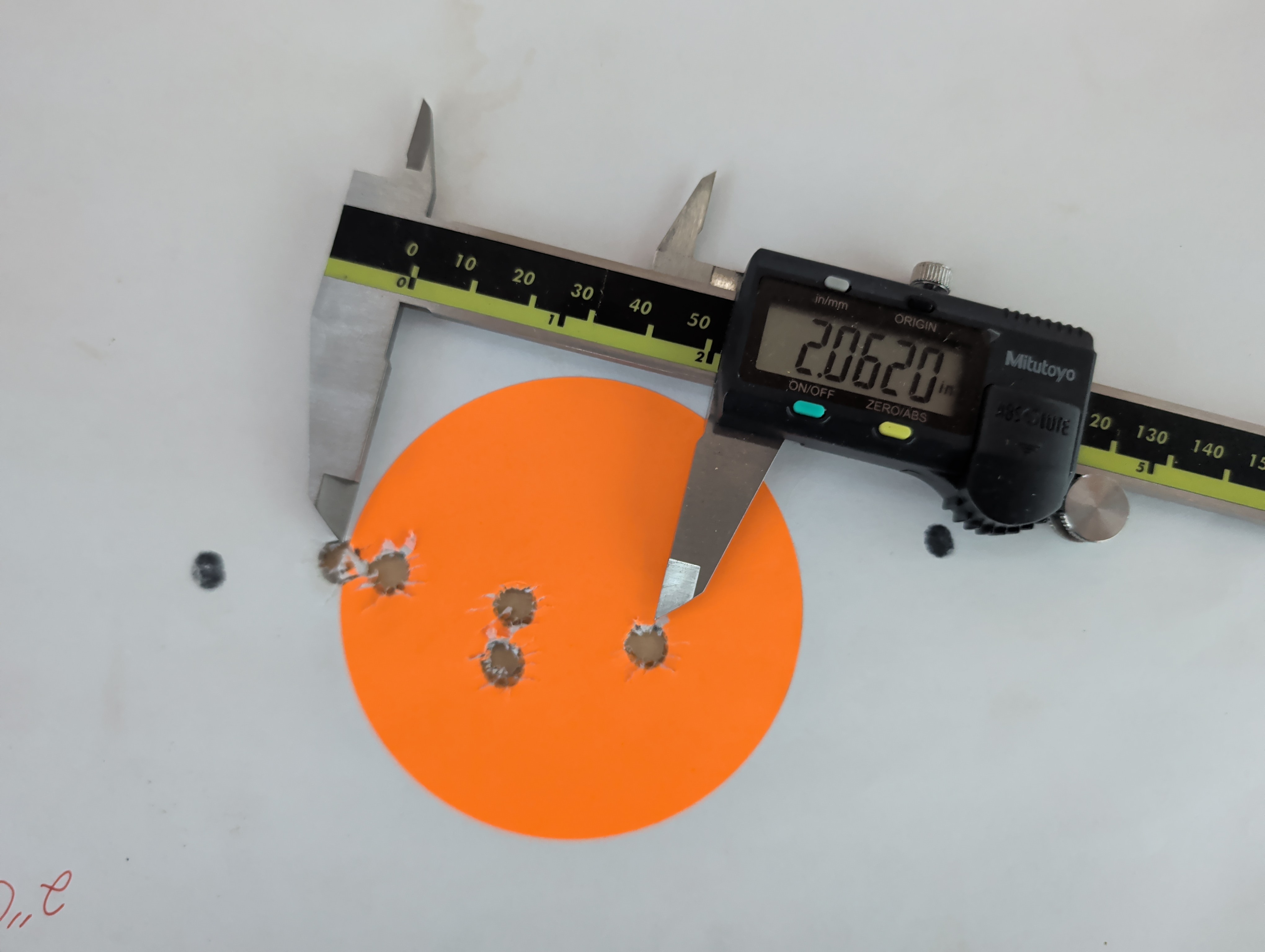
2.0865 inches, center to center
The documented factory configuration produced a five-shot, 100-yard group. That result is a baseline in this rifle—not a judgment about factory ammunition or the projectile.
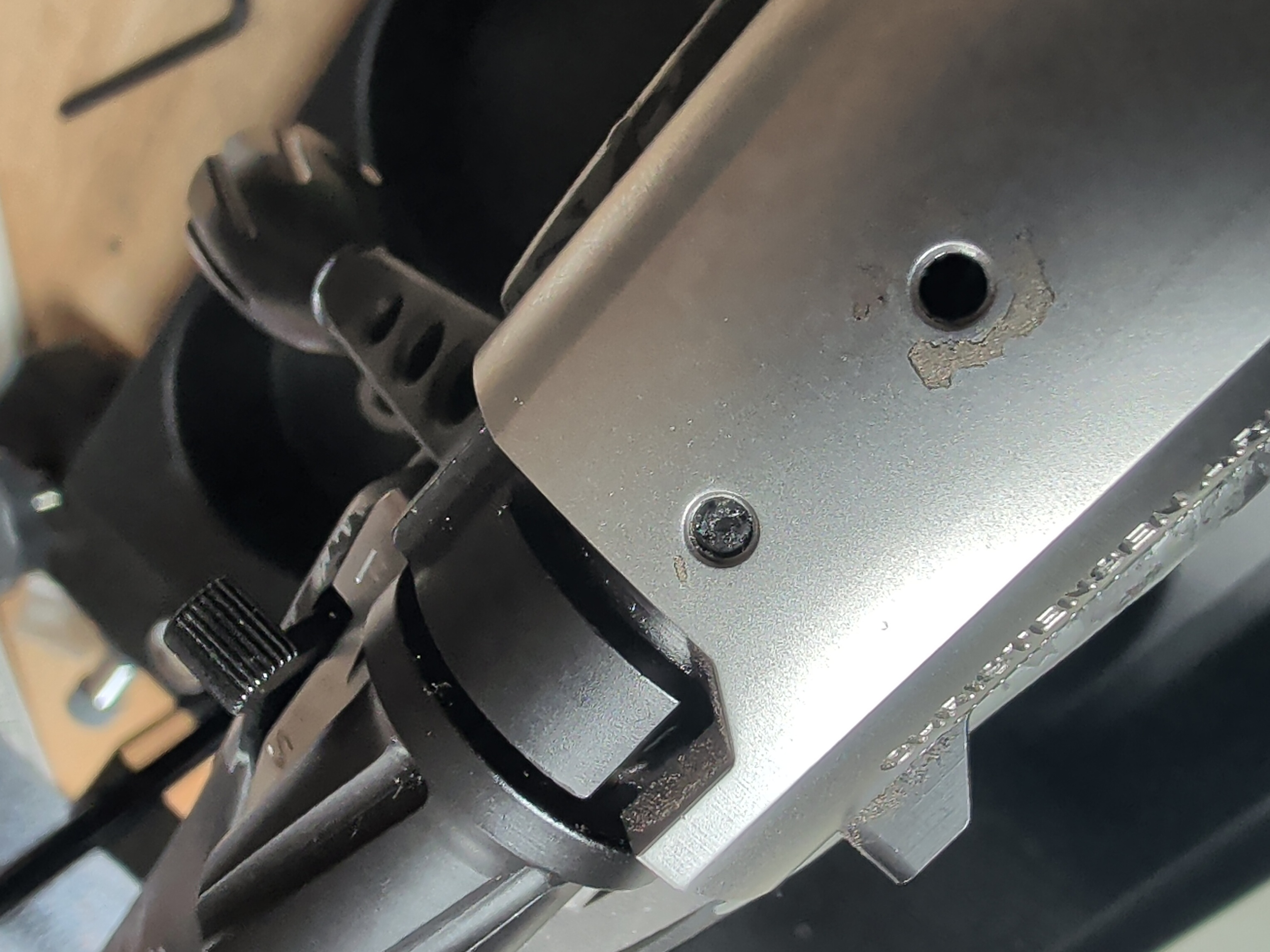
The platform came first
Initial evaluation identified a compromised scope-base mounting interface. The interface was corrected and subsequently verified before ammunition comparisons continued.
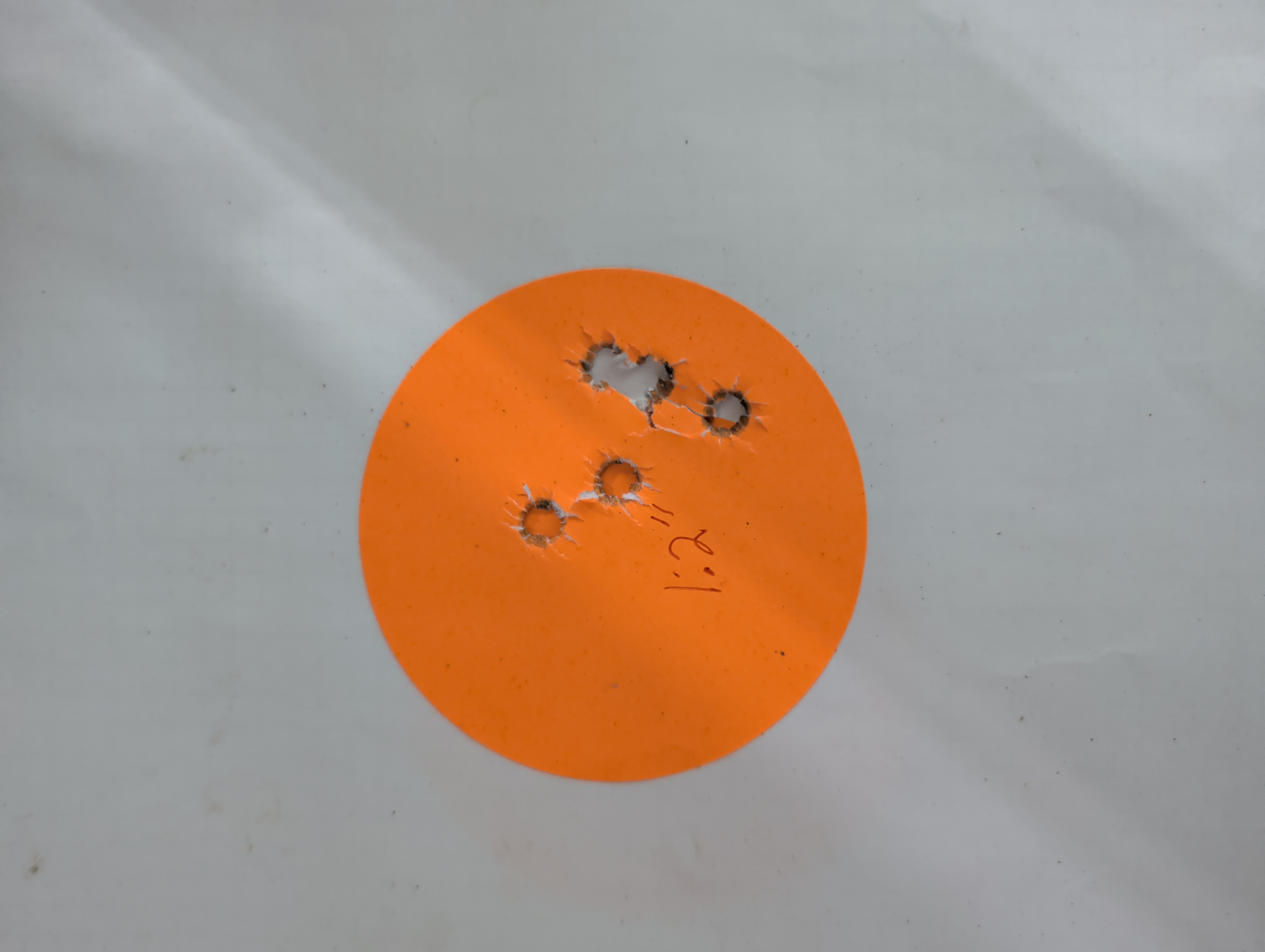
1.2065 inches, center to center
The final rifle-specific configuration was documented with five shots at 100 yards. The visible 1.2-inch field note is supported by the retained 1.2065-inch center-to-center measurement.
A later measured comparison, not a recipe.
The factory and final configurations both used the same 190-grain Hornady CX projectile family. Factory ammunition produced a 2.0865-inch five-shot group at 100 yards. The final rifle-specific configuration produced a 1.2065-inch five-shot group at the same distance.
That is a 0.8800-inch reduction in group size within this documented rifle and test context. It does not make a universal statement about factory ammunition, the CX projectile, or any other .300 PRC.
| Later documented configuration | Five-shot group |
|---|---|
| Hornady factory baseline | 2.0865 in |
| Rifle-specific final configuration | 1.2065 in |
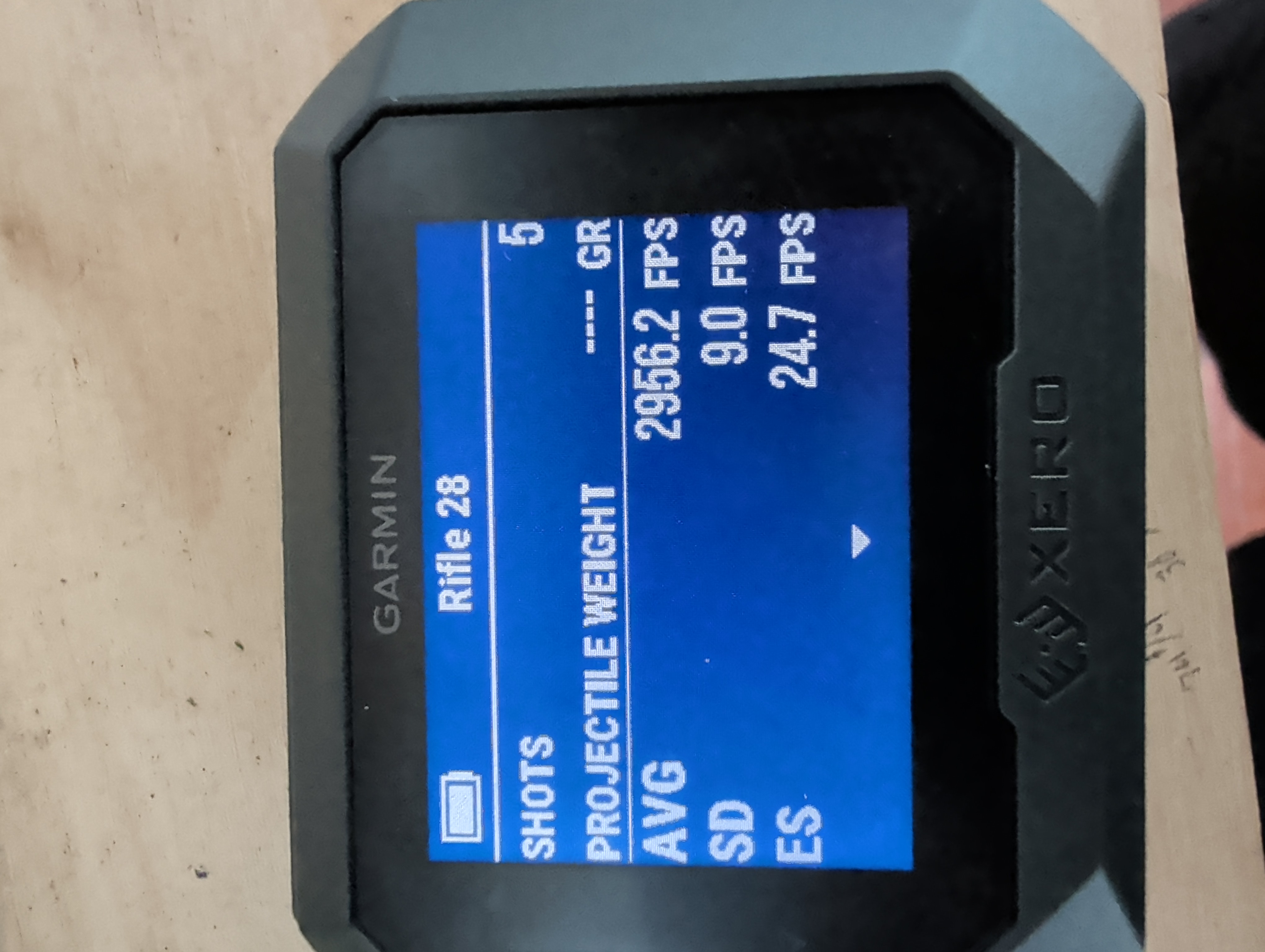
The same five-shot string.
The final target and the Garmin velocity record are the same exact five-shot string. That string averaged 2,956.2 fps, with a 24.7 fps extreme spread and 9.0 fps standard deviation.
Previously fired Hornady brass was used for this practical platform evaluation. The result is not presented as the ceiling of a fully optimized brass-preparation program; it is a documented record of this rifle under this final configuration.
Method and result, kept in proportion.
It supports
A documented comparison on one completed rifle after an identified platform issue was corrected and verified. The retained targets and chronograph record connect the final group and velocity data to the same five-shot string.
It does not support
A universal accuracy promise, a conclusion that factory ammunition or the projectile was at fault, or a duplicate loading sequence. Exact powder charge, primer, seating figures, cartridge dimensions, lot information, and detailed repair steps remain private.
Source note
Christensen Arms’ Ridgeline-compatible scope-base documentation identifies 6-48 screws for 2017-and-newer Ridgeline receivers. The later custom 8-40 correction in this project is described only as a verified correction—not as the factory specification or a public repair guide. View manufacturer reference